Every business wants to grow. But growth only works well when the company has the capacity to handle it.
Without the right foundations, growth can feel messy: missed deadlines, stressed teams, unclear priorities, and unpredictable performance.
Operational Excellence is the solution to that. It’s not a corporate buzzword. It’s the discipline of running your business in a clear, efficient, repeatable, and continuously improving way, without adding unnecessary bureaucracy.
Operational Excellence is how a company moves from “we’re trying hard” to “we deliver consistently, every day.”
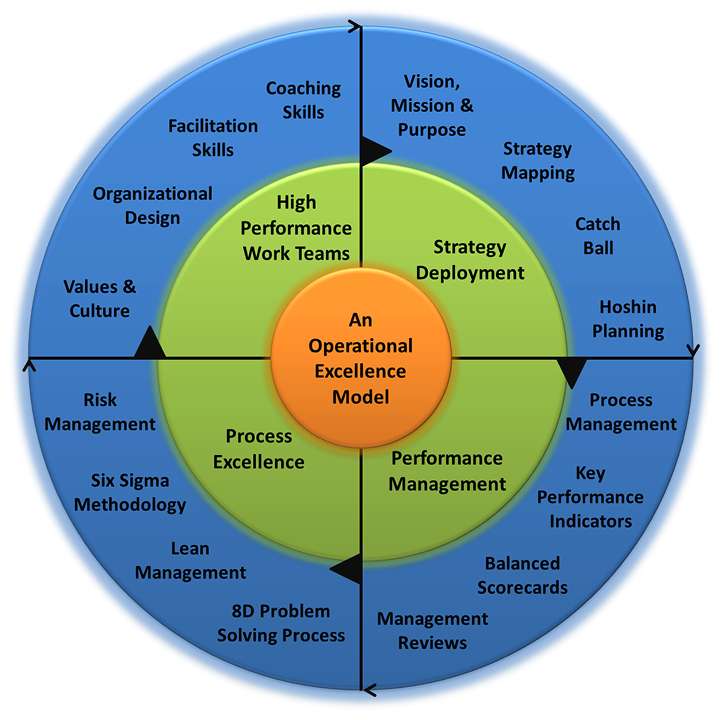
The Five Elements of Operational Excellence
Here’s a practical breakdown of the key elements, framed for founders and leaders.
1. Strategy Deployment: Turning Ambition into Action
Many companies have a strategy. Fewer know how to execute it.
Strategy deployment means:
- Translating goals into clear priorities
- Assigning ownership
- Aligning resources
- Making sure the team understands what matters most
It creates a direct line from vision to daily work. Without it, teams stay busy – but not effective.
2. Performance Management: Keeping the Business on Track
Performance management gives your business a steady rhythm. It’s where:
- KPIs become meaningful
- Progress is visible
- Issues surface early
- Decisions become sharper
It’s not micromanagement. It’s a reliable rhythm of review, learning, and adjustment that keeps the business moving forward.
3. Process Excellence: How Work Actually Gets Done
Process excellence is about creating simple, usable, repeatable ways of working that reduce friction.
It helps achieve:
- Fewer errors
- Smoother handovers
- Better customer experience
- Less firefighting
Good processes support people; they don’t slow them down. They create freedom, not constraints.
4. High-Performance Teams: People Who Can Deliver
Operational Excellence doesn’t work without teams that understand:
- Their roles
- Expectations
- Ways of working
- How their work contributes to the whole
High-performance teams aren’t built by pushing harder; they’re built with clarity, trust, structure, and shared responsibility. When people understand the “why” and “how,” strong performance follows naturally.
5. Tracking & Monitoring: Seeing What’s Really Happening
Tracking gives visibility, accountability, and insight. It helps you notice patterns:
- What’s slowing the team down?
- Where is waste occurring?
- Which risks are building?
- What’s improving?
With this information, companies stop reacting and start steering.
What Operational Excellence Really Means
At its core, Operational Excellence is the combination of:
- Clear priorities
- Strong execution
- Consistent delivery
- Empowered teams
- Continuous improvement
Put simply, it means your business runs well today, tomorrow, and as it grows. It supports scale, stability, profitability, and sustainability. Operational Excellence is the difference between a company that survives and one that thrives.
Ready to Build Operational Excellence Into Your Company?
If you want your operations to be clearer, faster, more sustainable, and ready for growth, I can help you design and embed the right foundations.
Let’s discuss what your business needs next.